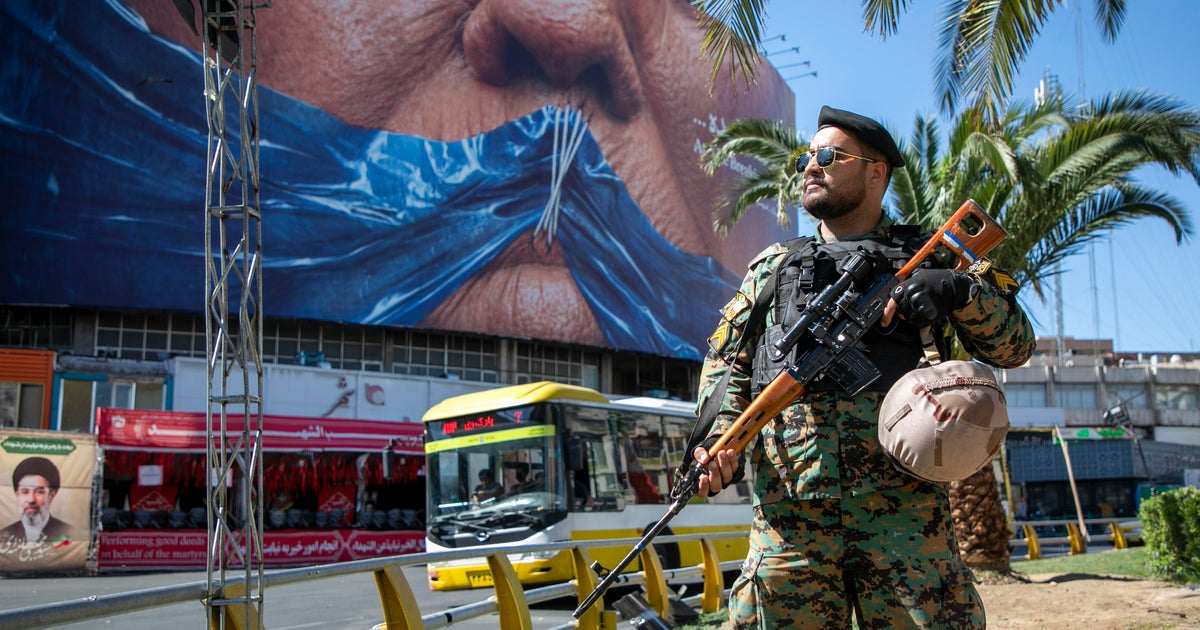
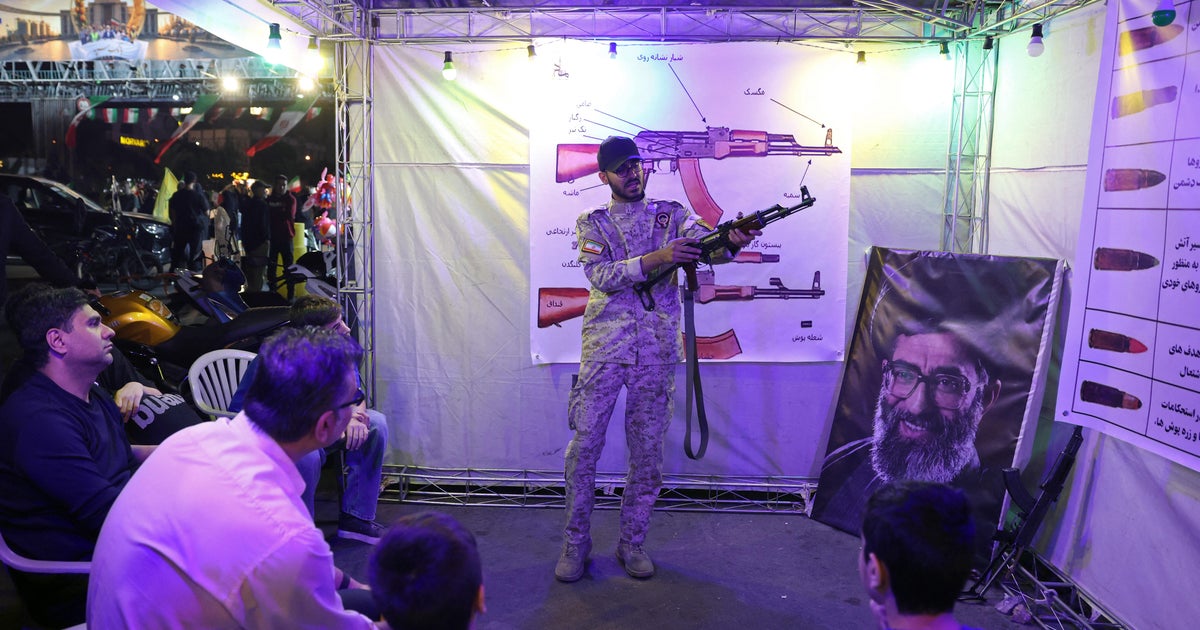
Trump says a peace deal is close.
President Trump said on Saturday that the United States was close to reaching an agreement to end the war with Iran, although there was no immediate public confirmation from Iran or Israel. The announcement comes almost three months after the US and Israel launched attacks on Iran.
Mr. Trump provided few details about the initial agreement, which he said was “extensively negotiated.”
Talks between U.S. and Iranian negotiators have been deadlocked over Iran’s nuclear program and control of the Strait of Hormuz, through which much of the world’s oil and natural gas supplies pass. Despite the cease-fire that began on April 7, inflation and wholesale prices in the United States have risen sharply as the ripple effects of the war continue to affect the economy.
As Mr Trump tried to encourage the Iranians to topple their theocratic leadership, the conflict – the second time in less than a year that Mr Trump directly implicated the US in attacks on Iran – escalated into a regional war in February that has left thousands dead, mostly in Iran and Lebanon. Millions of people have been displaced from their homes and the world economy has been badly damaged.
Some important moments of the battle are:
February 28: The US and Israel launched strikes across Iran, targeting a government compound and military targets in Tehran. The blasts killed Ayatollah Ali Khamenei, the country’s supreme leader for nearly 37 years, as well as other high-ranking military and intelligence leaders.
At least 175 people, most likely children, were killed in an attack on a girls’ primary school in southern Iran, health officials and Iranian state media said. According to US officials familiar with the military investigation, the attack was a targeting error by the US military.
Iran retaliated by firing missiles and drones at US military bases in Israel and in the region, including Qatar, Kuwait and the United Arab Emirates.
March 1: First, six American soldiers were killed in an Iranian drone strike in Port Shuaiba, Kuwait. Americans have to die in war.
The Iran-backed militant group Hezbollah dragged Lebanon into the conflict, firing rockets at Israel in retaliation for the death of Iran’s supreme leader.
In a brief telephone interview with The New York Times, Mr. Trump offered several seemingly contradictory visions of how a new government in Iran might form and how the conflict would unfold. Asked how long the U.S. and Israel plan to maintain their attack on Iran, Mr. Trump said “four to five weeks.”
March 8: After several top Iranian leaders were killed in airstrikes, Iran nominated the slain supreme leader’s son, Mujtaba Khamenei, as his father’s successor. Ayatollah Khamenei, 56, was appointed by a committee of senior Shiite clerics, signaling continuity and defection after Mr Trump called him an “unacceptable” choice.
March 11: Iran has stepped up its attacks in and around the Strait of Hormuz, targeting at least three ships, according to a British maritime agency. Iran has claimed responsibility for an attack on a Thai bulk carrier. The attacks sent oil prices soaring and the Trump administration scrambling to calm global markets.
March 12: Mujtaba Khamenei issued his first written statement as Supreme Leader, directing the military to continue the process of closing the Strait of Hormuz.
Six American crew members were killed when a KC-135 military refueling plane crashed in Iraq, bringing the total number of U.S. troops killed in combat to at least 13.
March 13: The US military carried out a major bombardment on Kharg Island, Iran’s main oil export hub. Mr. Trump said the raid targeted military infrastructure but not oil facilities on the island, which is responsible for about 90 percent of Iran’s oil exports.
March 17: The Israeli military killed two of Iran’s top leaders: Ali Larijani, head of the country’s National Security Council, and Gholamreza Soleimani, head of the Basij, a militia affiliated with the Islamic Revolutionary Guard Corps. The killings represent the biggest blow to Iran’s leadership since February 28.
March 18: Iran and US allies have attacked key energy infrastructure in the Gulf. Israel attacked Iran’s South Pars gas field, which accounts for about 70 to 75 percent of its natural gas production. Qatar, a US ally, said Iran attacked its Ras Lafan industrial city, the world’s largest liquefied natural gas export plant.
March 23: Mr. Trump said that the United States and Iran are talking about ending the war. It was the first public indication of diplomatic negotiations since the outbreak of war.
March 27: An Iranian attack on the Prince Sultan Air Base in Saudi Arabia injured 12 US soldiers, one of the worst breaches of US air defenses in the war.
April 3: Iran shot down a US Air Force F-15E fighter jet carrying two crew members, one of whom ejected safely that day. The risky search-and-rescue operation for the other airmen lasted two days and took the commandos deep into Iran. The downing of the F-15E marked the first time a US fighter jet had been shot down in combat.
April 7: Mr. Trump announced a two-week ceasefire with Iran. Iran’s National Security Council confirmed the deal, calling it a victory.
April 8: Israel launched its heaviest bombardment of Lebanon since the start of the conflict, launching more than 100 airstrikes in just 10 minutes, targeting Hezbollah. Israel said that Lebanon was not included in the US-Iran ceasefire. On the same day, Iran publicly released a 10-point framework for negotiations that included some more ambitious demands.
April 11: Vice President JD Vance traveled to Islamabad for Pakistan-mediated peace talks with Iran. He was joined by Mr Trump’s special envoy Steve Wittkoff and his son-in-law Jared Kushner. Led by Speaker of the Iranian Parliament General Mohammad Baqir Ghalib, the Iranian delegation included top diplomats, senior military officers and financial experts.
April 12: The talks ended without an agreement as the two sides failed to agree on key points, including Iran’s uranium stockpile and the reopening of the Strait of Hormuz.
April 16: Israel and Hezbollah agreed to a 10-day ceasefire in Lebanon brokered by US diplomats, removing a major obstacle to talks between Iran and the US.
April 17: Iran and the United States issued statements announcing the opening of the Strait of Hormuz to commercial vessels following the Lebanese ceasefire agreement. Less than 24 hours later, Iranian authorities closed the waterway and maritime authorities recorded two incidents of ship collisions.
April 19: US Marines fired on and captured an Iranian cargo ship that attempted to evade the US naval blockade.
April 21: Mr Trump announced he was extending the ceasefire with Iran, hours before it was set to expire, saying he would give Tehran time to come up with a new proposal to end the war.
May 1: Mr Trump rejected Iran’s latest proposal to end the war. That same day, the president sent letters to Congress stating that hostilities with Iran had ended. The letters argued that the 1973 War Powers Resolution, which required the president to obtain congressional authorization to continue military operations after 60 days, was not in effect because of the armistice.
May 18: Mr Trump said he had authorized a new wave of strikes against Iran but was holding off on allowing further negotiations on the nuclear deal. It was not the first time the president had threatened to resume war, only to back down at the last minute.
May 23: Mr Trump said he had spoken to several Middle East leaders about a “peaceful” memorandum of understanding with Iran. “The final aspects and details of the deal are currently being discussed, and will be announced soon,” Mr Trump said in a post on Truth Social. There was no immediate confirmation from Iran or Israel. But three senior Iranian officials said Tehran had agreed to a proposal that would halt fighting on all fronts, including in Lebanon. reopening the Strait of Hormuz without a toll; And end the US naval blockade of Iran.
Stay updated with the latest alerts on this story:
View Original Coverage