Deep water, big ships: Completion of KGTL dredging marks a new chapter for Pakistan’s trade
Pakistan’s maritime industry has entered a deeper and more competitive era with the completion of dredging operations at the Karachi Gateway Terminal Limited (KGTL), a significant development that strengthens Karachi Port’s ability to handle larger vessels, improve freight efficiency and support the country’s long-term trade competitiveness. At a time when increasing exports, lowering logistics costs and improving foreign exchange are central to Pakistan’s economic priorities, the upgraded depth at Karachi Port’s East Wharf represents a strategic step for importers, exporters, shipping lines and the wider national supply chain.
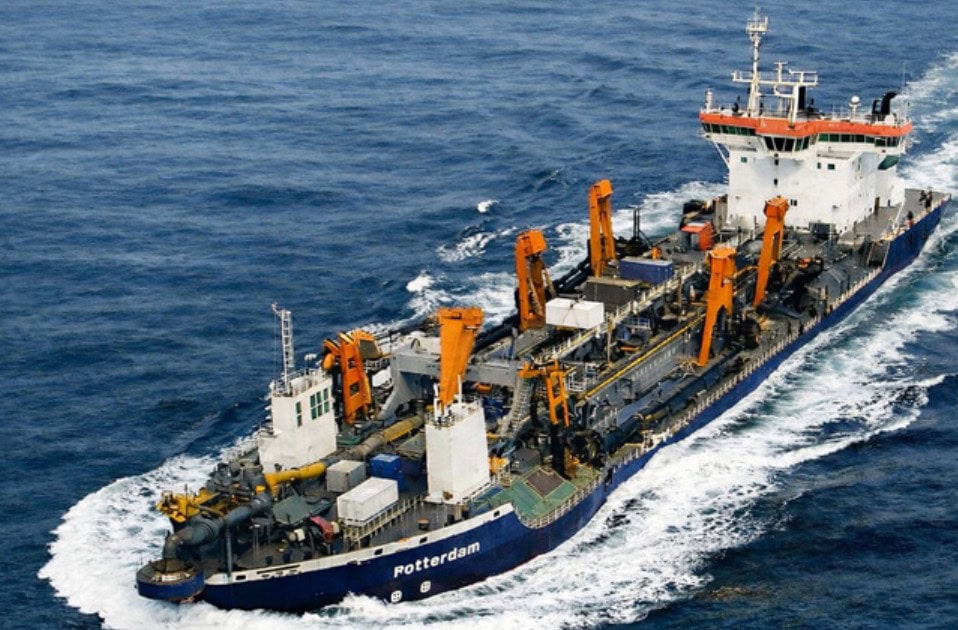
Completed dredging operations have achieved a navigational depth of minus 14 meters in the upper and lower channel including a turning circle of 450 m diameter at Karachi Port. At East Wharf, a depth of 15.5 meters has been achieved from berths 6 to 17, covering the container terminal managed by Karachi Gateway Terminal Limited (KGTL) and the multi-purpose terminal managed by Karachi Gateway Terminal Multipurpose Limited (KGTML).
The completion of the dredging is part of AD Ports Group’s ongoing investment program in Pakistan, reflecting substantial investment of over USD 200 million currently underway at its Karachi terminals. Led by Notum Ports, its international ports operating arm, under a concession framework with Karachi Port Trust, the Port Authority oversees port operations and facilitates infrastructure development at Karachi Port.
This achievement enhances East Wharf’s operational capacity in both container and bulk cargo handling. It enables deep draft vessels to call at berths managed by KGTL and KGTML, enabling better vessel planning, more efficient movement of cargo and stronger connectivity between Pakistan and key regional and international trade corridors.
For KGTL, completion of dredging significantly increases the handling capacity of the container terminal. The terminal is now positioned to accommodate vessels of 350 meters in length and 15.5 meters in draft compared to the previous capacity of approximately 305 meters in length and 13 meters in draft. This upgrade will support better utilization of berths, greater operational flexibility and greater reliability for shipping lines calling at Karachi Port.
“The dredging signifies the government’s commitment to modernize the port facilities and strengthen Pakistan’s role in regional and global trade. It will enable the KPT to accommodate vessels up to 350 meters with a Gross Registered Tonnage (GRT) of 100,000,” Muhammad Junaid Anwar Chaudhry – Federal Minister for Maritime Affairs.
The impact of this development extends beyond the terminal. Larger ships typically allow cargo to be moved more efficiently, reducing transportation costs on a per-unit basis and improving the overall economics of trade. For Pakistan, where ocean freight accounts for a large share of import and export costs, such improvements could help strengthen the competitiveness of local businesses and more efficient movement of goods through the country’s key maritime gateway.
The dredging milestone is part of a wider investment program by AD Ports Group through Noatum Ports to modernize terminal infrastructure and strengthen Pakistan’s maritime logistics ecosystem. Civil works for the expansion of the container terminal are underway, and upon completion, KGTL’s container handling capacity is expected to increase from 750,000 TEUs to one million TEUs annually. In parallel, AD Ports Group has placed orders for new ships and yard cranes for the container terminal, further strengthening the long-term modernization of Pakistan’s container handling infrastructure.
For KGTML, deep draft creates a big advantage for Pakistan’s bulk cargo sector. The multipurpose terminal will be able to handle larger vessels of around 120,000 metric tons (post-panamax vessels) compared to the previous vessel size of around 60,000 metric tons (handimax vessels). This capability is expected to help exporters to improve freight efficiency, reduce freight costs and generate an estimated USD 130 million in foreign exchange reserves and move more competitively through Karachi Port.
Equally important is the benefit to importers. Larger ships and better terminal capacity can help reduce freight costs on imported goods, raw materials and industrial inputs. Over time, these efficiencies can support more competitive land costs, benefiting industries, traders and ultimately consumers.
Completion of dredging at KGTL and wider East Wharf berths therefore has strong economic relevance. It improves Pakistan’s port capacity, strengthens shipping efficiency and supports the country’s ability to handle growing trade volumes. It also improves Karachi Port’s position in a competitive regional environment where shipping lines increasingly prefer ports that can handle larger vessels with greater reliability and faster turnaround.
This achievement also reflects AD Ports Group’s vision of continued investment in Pakistan. Since entering the Pakistani market through its Karachi terminal concession, the Group has continued to invest in infrastructure, equipment, technology and operational systems at both KGTL and KGTML. These investments are aimed at modernizing terminal operations, improving service delivery and creating long-term value for Pakistan’s trade ecosystem.
At KGTML, AD Ports Group is advancing the development of Pakistan’s first dedicated bulk export facility. Investment in bulk handling equipment will strengthen the country’s bulk and breakbulk export infrastructure, enabling faster, cleaner and more efficient cargo handling. This is particularly important for commodities such as clinker and other large exports, where vessel size, loading efficiency and storage capacity directly affect freight costs and market competitiveness.
The development of warehouses at KGTML has also begun as part of a wider plan to build modern civil infrastructure for automated and connected conveying, storage and handling systems for bulk cargo. The project is designed to support dust-free and environmentally responsible operations through specialized automated loaders capable of handling gearless vessels. After completion of its first phase, the facility is expected to support export bulk cargo capacity of up to 8 million tonnes per annum, while also improving the handling of import cargo.
In addition, the development of silos and clean bulk storage infrastructure, supported by a long-term agreement between Karachi Gateway Terminal Multipurpose Limited and Louis Dreyfus Company Pakistan, will further strengthen Pakistan’s agri-bulk and commodity handling capacity. The partnership is expected to support modern bulk storage and handling solutions, increase the movement of agricultural commodities and strengthen Karachi Port’s role as a strategic gateway for regional and international agricultural trade.
The value addition from completion of dredging works is therefore immediate and long-term. Immediately, it allows larger and deeper draft vessels to call at the East Wharf. In the long run, it supports terminal expansion, lower freight costs, stronger export competitiveness, better import efficiency and better utilization of Pakistan’s maritime infrastructure.
For exporters, the benefit lies in the ability to move larger quantities more efficiently and at more competitive freight rates. For importers, this lies in better shipping economics and stronger supply chain reliability. For shipping lines, this makes for a more efficient and reliable port call. For Pakistan’s economy, it strengthens an important trade gateway at a time when logistics efficiency, export competitiveness and foreign exchange management are essential for sustainable growth.
Karachi Port has long served as the main maritime gateway of Pakistan. With the completion of dredging at KGTL and East Wharf Berths 6 to 17, this gateway is being modernized for the next phase of national trade growth. The development signals a clear shift towards deeper, larger, cleaner and more efficient terminal operations.
Therefore, the completion of dredging at KGTL is more than an important milestone. It is a national commercial landmark. Through deeper channels, upgraded berths, new equipment, terminal expansion and continued investment by ADPorts Group, Pakistan’s busiest maritime gateway is being repositioned to handle larger vessels, move cargo more efficiently and support the country’s long-term economic growth. The country’s efforts to attract more foreign investment
The post Deep water, big ships: Completion of KGTL dredging marks a new chapter for Pakistan’s trade appeared first on Daily Pakistan English News.
Stay updated with the latest alerts on this story:
View Original Coverage