Fazlur Rahman’s Salary Dirt: How Pakistan’s Martyrs Became a Political Punchline?
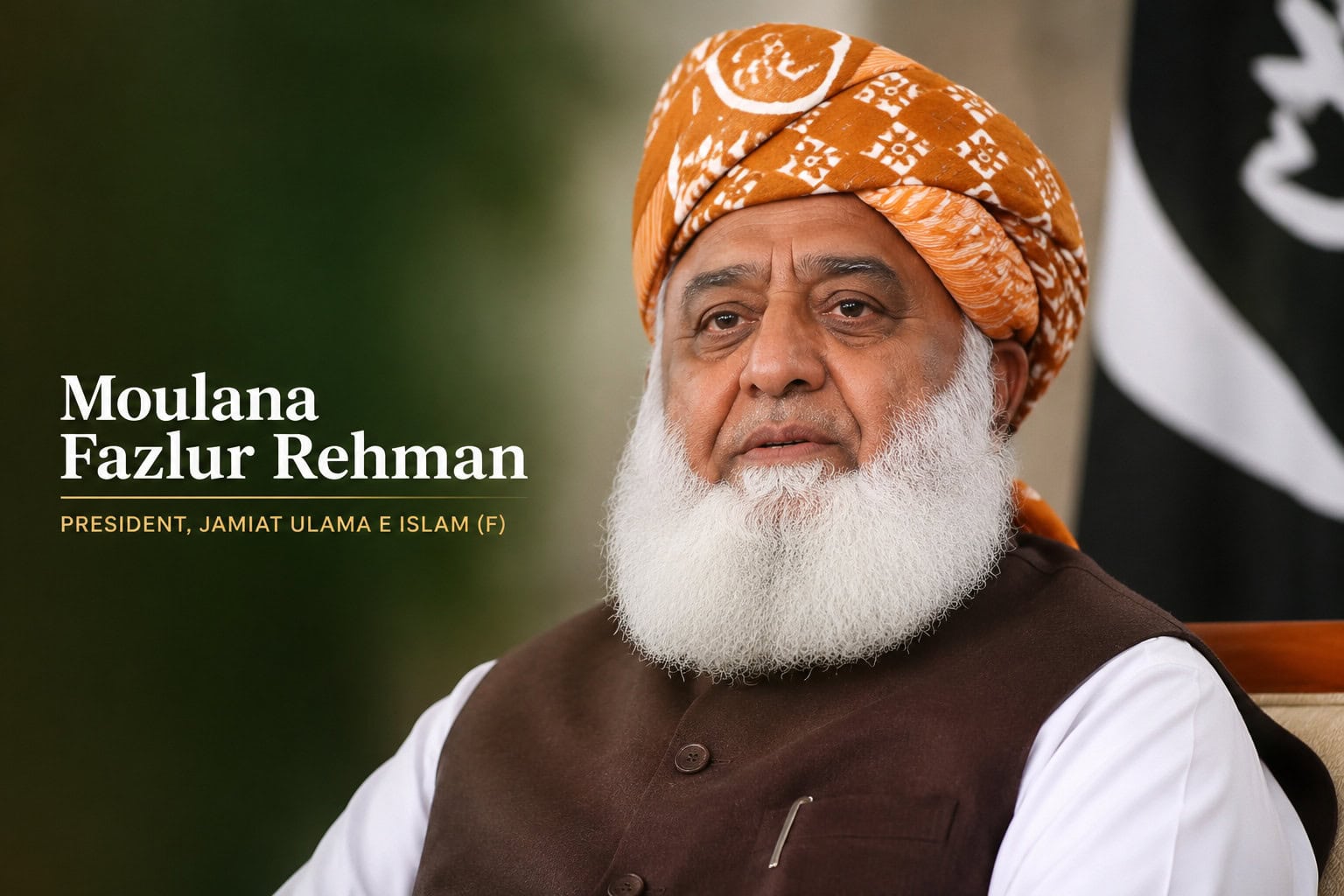
Fazlur Rehman Nation has to answer not explanation This man has spent five decades demanding respect for religion, tradition, sanctity of sacrifice. Yet last week in Kasur, the JUI Fazal chief stood up to his own supporters and reduced the killing of Pakistani soldiers to a line item on the payroll. He said that soldiers are salaried employees who are paid to defend the country. This is not a line that Pakistan will soon forget, and it is a line that it wants the country to respond to.
Does Fazlur Rehman actually know what a Naik or Havaldar patrolling the deserts of North Waziristan or Baluchistan earns in a month? Several pay trackers put the starting salary of a soldier at around Rs 35,000, a Naik at around 40,000 and a Havildar at 48-50,000, before rent and inflation quietly eat away what’s left. It is assumed that they are men just collecting a pay cheque. The moment their lives are cut short by roadside bombs or ambushes. Does he really believe that pay slips and pensions explain why a young soldier walks towards a bullet instead of away from it?
Because people are dying, and dying in large numbers. In 2025 alone, according to the army’s own count, 1,235 security personnel were martyred fighting the terrorists who had taken over large parts of Khyber Pakhtunkhwa and Balochistan. If money were really the motive here, wouldn’t men be lining up to leave for private security jobs overseas, where the pay is better, and no one is shooting at them? They are not aligned. Someone ask Fazlur Rehman this question directly. Ask them why, after decades in politics chasing alliances, ministries and provincial seats, they have never sent any of their sons into ranks they now claim are just for money. Ask her why sacrifice seems shameful to her when she wears the uniform, yet sacred when it serves her own political survival.
The nation responded faster than he expected. Defense Minister Khawaja Asif termed the remarks as unfair and said in plain words that no one dies just for salary. Planning Minister Ahsan Iqbal said that linking shahadat to pay checks is neither fair nor in line with basic decency. A court in Gujranwala has already summoned him to appear, and a separate application has been filed in Lahore for a criminal case against him. On social media, Pakistani ministers were far less diplomatic than ordinary ministers, mocking a politician who has spent decades drawing a salary from public office without putting a single day of personal risk for the country he claims to defend. Martyrs’ widows, civilians and soldiers still serving in the mountains of Waziristan have asked the same question online: Does Fazlur Rehman really believe that a grieving mother raised her son for eighteen years so that he could earn a salary and die for it?
Pakistan has buried thousands of its soldiers, policemen and Frontier Corps personnel in the two-decade-long war against terrorism. This is a country where families light candles for sons who never come home, not because a pay slip is called for, but because duty is done. Fazlur Rehman built his entire career on the call of faith and sacrifice from every pulpit he ever stood on. Now he owes the nation, and every grieving family from Waziristan to Bela, a more serious response than a political explanation. People are clearly asking. Why did the leader who claimed to talk about religion and honor choose the price of martyr’s blood?
The post Fazlur Rehman’s Salary Dirt: How Pakistan’s Martyrs Became a Political Punchline appeared first on Daily Pakistan English News.
Stay updated with the latest alerts on this story:
View Original Coverage