Pakistan have decided to bowl first in the first ODI against Australia.
RAWALPINDI – Pakistan won the toss and elected to bowl first in the first ODI of the three-match series against Australia, setting the stage for a thrilling contest under pressure.
The Green Shirts, led by Shaheen Shah Afridi, went into the match with experience and fresh talent, as Salman Ali Agha was his deputy. The playing group includes big names like Babar Azam, Shadab Khan, Naseem Shah and Haris Rauf, along with emerging players Abdul Samad, Muaz Sadaqat and Sufian Muqim. The squad also includes wicket-keeping options Rohail Nazir and Mohammad Ghazi Ghori, adding depth to the line-up.
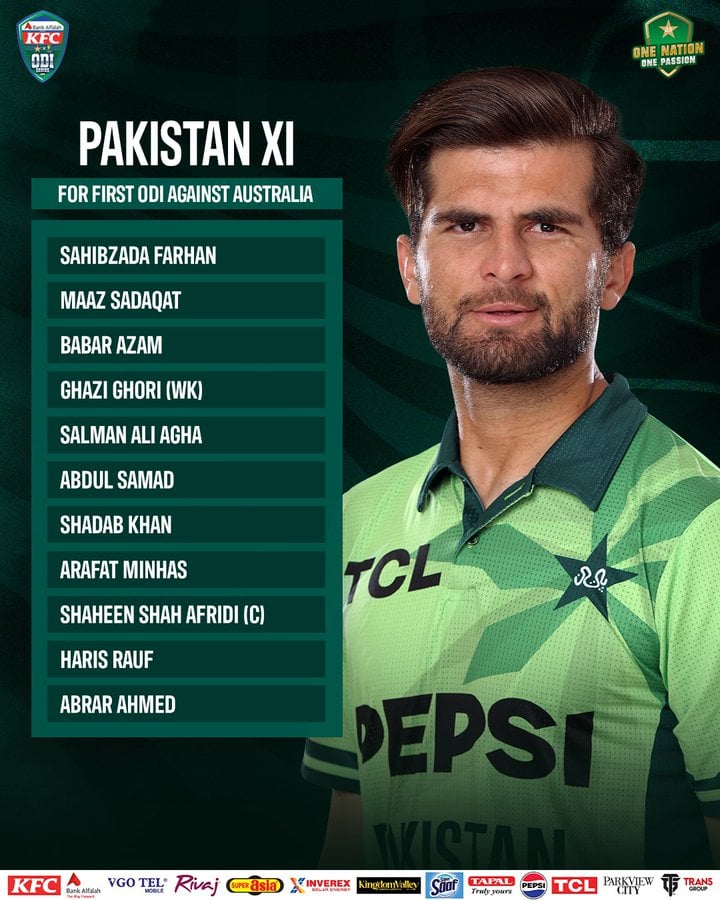
Australia arrived with a strong and balanced squad led by Josh Ingles. Their team includes veteran performers Marence Lebuschagne, Cameron Green, Alex Carey and Adam Zampa, supported by Nathan Ellis, Matthew Short and others, making them a formidable challenge in the series opener.
This rivalry adds extra weight to the competition, Pakistan and Australia have faced each other 111 times in ODIs. Australia has historically dominated with 71 victories while Pakistan has 36 victories. Three matches ended without a result and one ended in a tie, reflecting a long but uneven battle between the two sides.
Form is closely matched going into the series, with both teams having won three of their last five completed ODIs. Pakistan come into the series on the back of a 2-1 defeat in Bangladesh earlier this year, a result they will be eager to bounce back on home soil. Australia, meanwhile, returned to ODI cricket after a long hiatus since October 2025, when they won the series 2-1 at home against India.
With Pakistan opting to bowl first, the stage is now set for a high-intensity clash as both teams look to take early control of the series in Rawalpindi.
More updates to follow…
The post Pakistan’s decision to bowl first in the first ODI against Australia appeared first on Daily Pakistan English News.
Stay updated with the latest alerts on this story:
View Original Coverage