Pakistan’s credit rating has improved. What happens next?
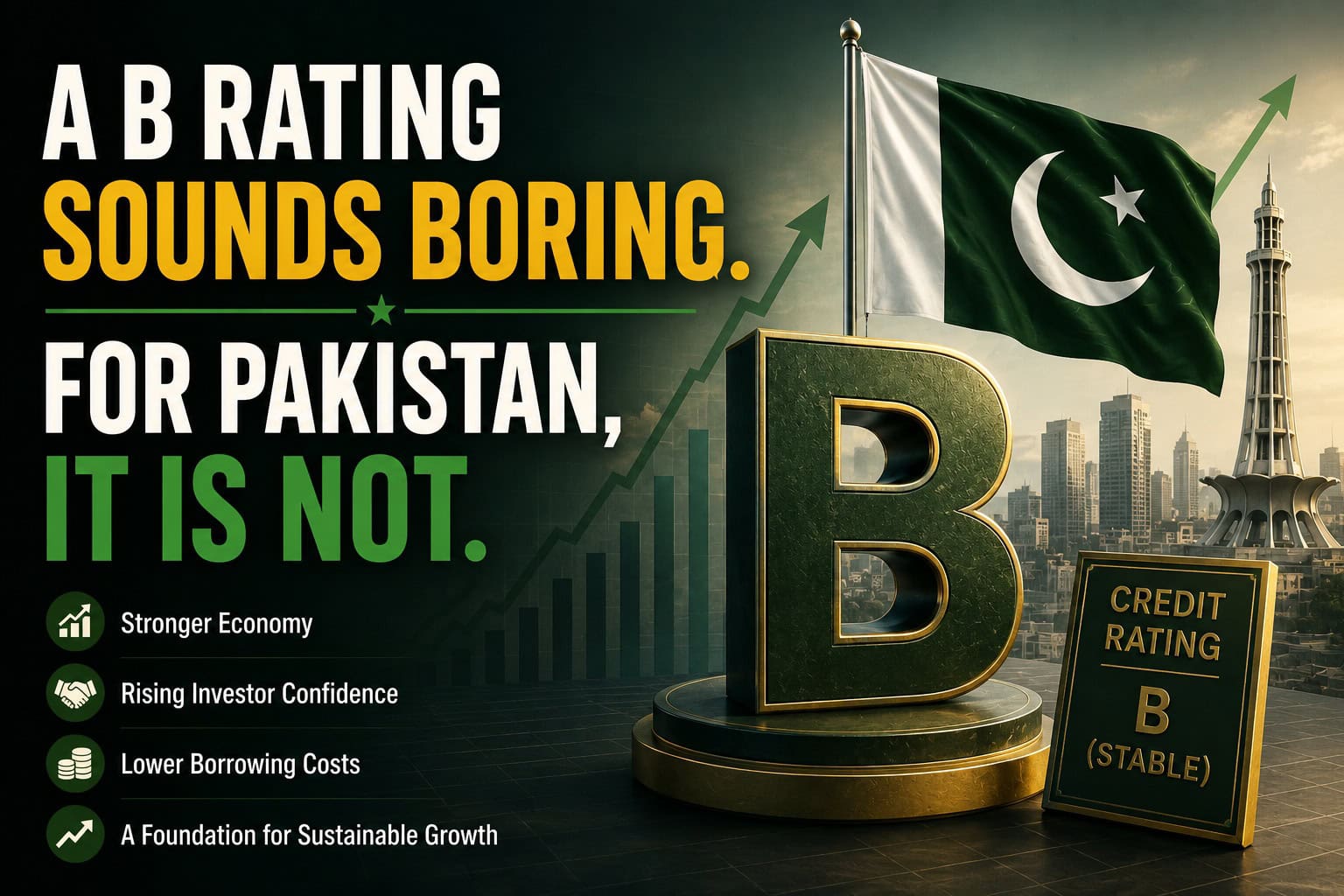
S&P last week raised Pakistan’s credit rating to B from B-minus with a stable outlook. Variation in classification is usually background noise. This is a different one.
Three and a half years ago, Pakistan’s foreign exchange reserves had shrunk to $6.7 billion and people were openly asking if the country would default. Reserves now stand at $25.3 billion, nearly four times as much. This kind of change does not happen by luck. This is because someone has been acting foolishly every quarter under an IMF program that does not condone slippage.
What strikes me the most is the tax number. Revenues rose by 3.2 percentage points of GDP in a single year, something finance ministers here have promised for decades and rarely delivered. This caused the deficit to shrink, from about 8 percent during the worst crisis years to about 4 percent of GDP.
S&P used a word that stuck with me: institutional, not policy, not leadership. It’s slower, less dramatic progress, and maybe that’s the point. Pakistan’s economy has been destroyed by good policies before, the moment politics changed direction. This time, a shaky coalition has held back long enough for reforms to come through. Boring, here, is an understatement. Add in a third year of GDP growth, at 3.6 percent this fiscal year, and a real base is forming.
None of this means the hard part is over. Interest payments still eat up a large share of revenue, the region is volatile, and energy prices could rise again. But agencies don’t give upgrades for being nice. They come when numbers hold, and politics don’t erupt all at once, which is rare for Pakistan.
So what does this mean for someone who has never read a rating report in their life?
Start with prices. A strong credit standing keeps the currency stable, and the rupee has already strengthened this year. A stable rupee means that the price of imported fuel and wheat does not suddenly increase by a third overnight, the kind of shock that has repeatedly affected domestic budgets. This stability means more to a family in Lahore or Multan than any bond market headline.
Then there is credit. When lending to a government seems less risky, banks tend to treat businesses the same way, and loans become somewhat cheaper. A vendor expanding, an exporter upgrading a factory, a manufacturer sitting on a stalled project, all have a better financing opportunity that makes sense. Cheap credit means more hiring, and hiring actually increases unemployment.
Foreign investment also follows the same logic. The rating change won’t make foreign headlines as wary, but investors watch the numbers closely. Each step upwards makes Pakistan look less like a gamble, whether the money goes to a factory, a call center or an energy project. Jobs follow this type of capital.
And then the simplest benefit. Every dollar not spent chasing interest payments is a dollar that could eventually go to a public hospital, a functioning school, or a road that survives its first flood. None of this happens automatically. But it becomes possible in a way that it wasn’t a few years ago, when the whole conversation was whether the country could pay its bills.
This is the next part worth watching. Not the letter grade itself, but whether or not it represents the breathing room it actually gets to those who have been holding their breath the longest.
The post Pakistan’s Credit Rating Improvement What Happens Next? appeared first on Daily Pakistan English News.
Stay updated with the latest alerts on this story:
View Original Coverage